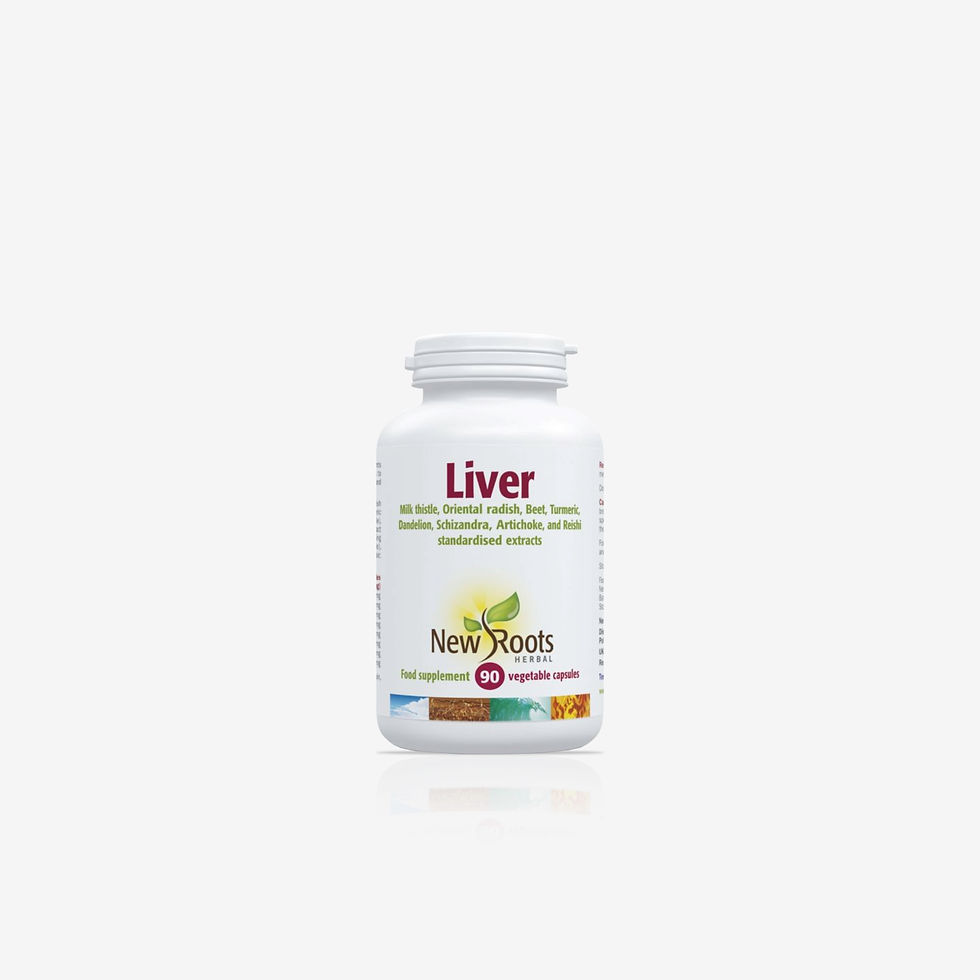
New Roots Herbal combines the expertise of naturopathic doctors, scientists, and herbalists to develop thoughtfully formulated nutritional supplements designed to support health and wellbeing.
Each formulation brings together high-quality nutrients and carefully selected botanical ingredients, chosen to work in harmony with the body’s natural processes.
Quality is central to every stage of production. From ingredient selection through to the finished product, rigorous testing for potency, purity, and contaminants helps ensure that every formulation meets the highest standards of safety and consistency.At Rossmore Health, we have chosen New Roots Herbal for its commitment to scientific integrity, exceptional quality, and evidence-informed nutrition.
It is a range built on the belief that effective supplementation begins with trusted ingredients, meticulous testing, and formulations designed with purpose.

We blend traditional formula remedies with the latest scientific advances in vitamins, botanicals, nutraceuticals, special extracts, and isolates. All raw materials that enter our facility are tested three times over for identity, contaminants such as mycotoxins (aflatoxins), PCBs, over 80 different pesticides, heavy metals, microbiology (bacteria), mould, and fungus. Most importantly, we validate the potency. All these tests are conducted at our state-of-the-art, 3400 sq. ft. laboratory staffed with 15 scientists, including 6 McGill University graduates. The laboratory is staffed by 3 PhDs, 4 MScs, and 8 BScs, who devote over 600 hours of testing and research weekly. Our sensitive, high-technology instruments have a greater sensitivity than older scientific testing equipment. With these sophisticated instruments, we achieve the most precise test results possible. Our sophisticated instruments and personnel allow us to perform extensive testing of our products. These tests ensure the safety of our products and their compliance to label claims. Many products can be tested using different instruments, but for simplicity, one instrument is typically preferred over another. Some instruments are better at identifying individual compounds, whereas others are more specialized in demonstrating the profile of a product’s “fingerprint.” Some instruments are better at analyzing water-soluble products (such as vitamin C), whereas others are more suitable to oil-soluble products (such as fish oil or vitamin D).
Explore our collection below